
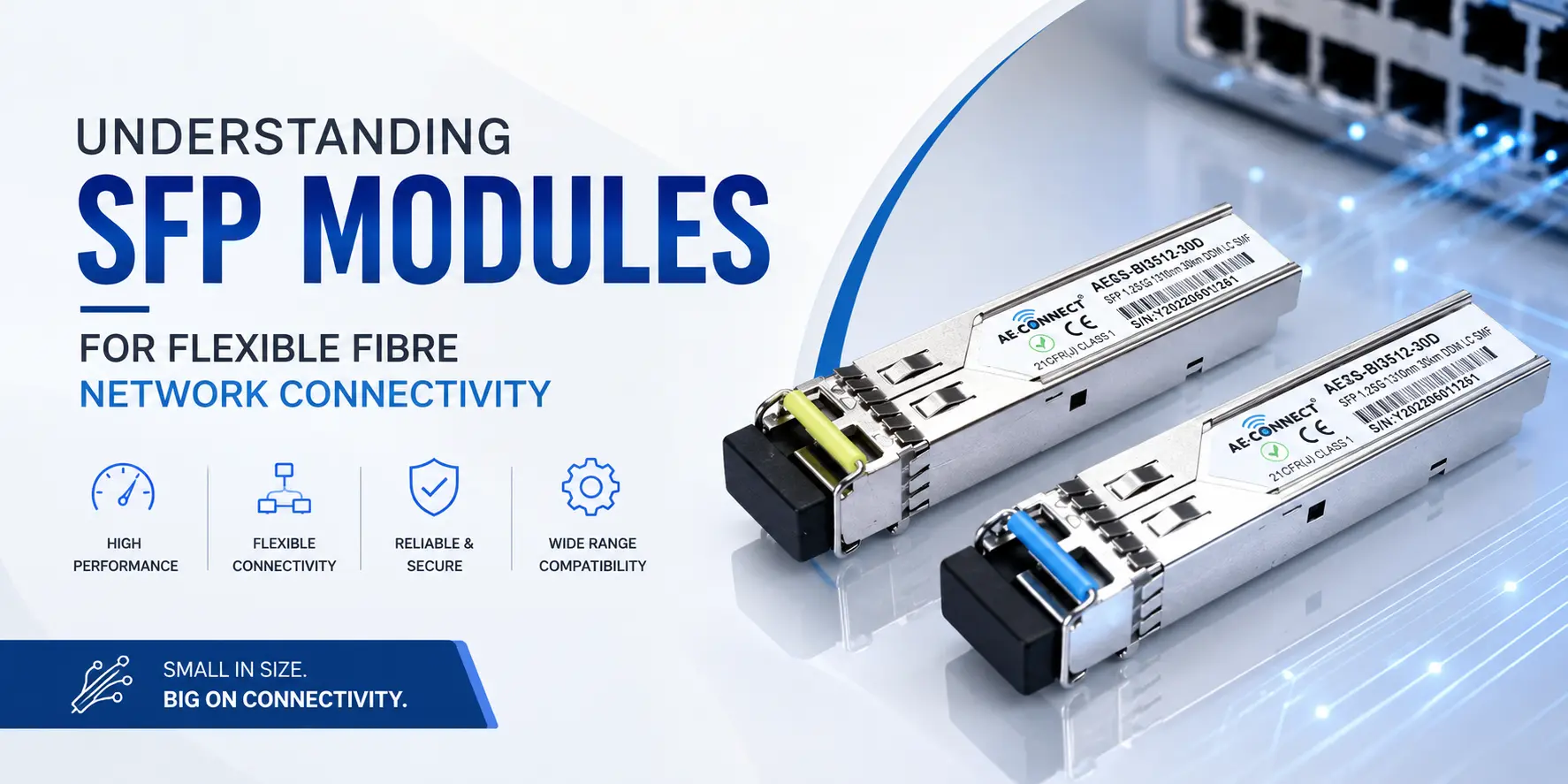
Modern networks often need to connect devices across different distances, locations, and types of network infrastructure. As businesses move towards faster and more flexible fiber-based connectivity, choosing the right optical interface becomes increasingly important. An SFP Module provides a practical way to add fibre or copper connectivity to compatible networking equipment without replacing the entire device.
These compact transceiver modules are commonly used with switches, media converters, and other network equipment that supports interchangeable interfaces. Depending on the network requirements, different modules can support different fibre types, transmission distances, and connection configurations. Understanding how these modules work and what to consider before selecting one can help businesses build more reliable and adaptable network infrastructure.
What Is an SFP Module?
An SFP, or Small Form-factor Pluggable module, is a removable transceiver that provides a network device with a specific connectivity interface.
Rather than having a fixed fibre interface built directly into a switch or other networking device, an SFP-compatible port allows users to install a suitable module according to their network requirements.
An optical transceiver can be used to support communication over fibre infrastructure, while certain SFP modules can also provide copper-based connectivity.
This modular approach gives network administrators greater flexibility when designing or upgrading infrastructure.
Why Are SFP Modules Important in Network Infrastructure?
Network requirements are not identical across every installation. An office network may need short-distance connectivity, while a manufacturing facility, campus or data centre may require communication across significantly longer distances.
Using interchangeable transceivers allows organisations to adapt compatible network equipment to different connectivity requirements.
Some of the key advantages include:
- Flexible fibre connectivity
- Easier network upgrades
- Support for different transmission requirements
- Reduced need to replace complete networking devices
- Compatibility with suitable SFP-enabled equipment
- More adaptable network design
This flexibility becomes particularly valuable when network infrastructure expands over time.
How Does an Optical Transceiver Work?
An optical transceiver performs two basic functions. It converts electrical signals from networking equipment into optical signals for transmission over fibre, and it converts incoming optical signals back into electrical signals.
The process allows compatible switches and other networking devices to communicate over fibre optic infrastructure.
In a typical installation:
- The SFP module is inserted into a compatible SFP port.
- The module connects to the appropriate fibre or copper medium.
- The networking equipment sends data through the module.
- The module converts the electrical signal into the appropriate transmission format.
- The receiving equipment converts the incoming signal back for network communication.
The specific performance of the connection depends on the module, networking equipment, cabling and overall network design.
What Types of SFP Modules Are Available?
SFP modules are available in different configurations because network installations have different requirements.
Fibre SFP Modules
fiber-based modules are designed for use with optical fibre infrastructure. They can be selected according to factors such as fibre type, transmission requirements and network equipment compatibility.
These modules are commonly relevant for:
- Building-to-building links
- Campus networks
- Data centre connectivity
- Industrial networks
- Long-distance communication
- Fibre up-links
Copper SFP Modules
Some SFP modules provide copper connectivity instead of optical fibre connectivity. These can be useful when an SFP-enabled device needs to connect to compatible copper Ethernet infrastructure.
The choice between fibre and copper depends on the existing network architecture and the intended connection.
What Should You Check Before Choosing an SFP Module?
Selecting an optical transceiver should be based on the requirements of the complete network rather than simply choosing a module based on appearance or price.
1. Check Equipment Compatibility
The first step is to confirm that the module is compatible with the switch, media converter or other networking equipment.
An SFP port does not automatically mean that every available module will work with the device.
Always check the equipment manufacturer’s compatibility requirements before installation.
2. Identify the Fibre Type
If you are using a fiber-based module, determine whether the network uses the appropriate fibre type for the selected transceiver.
The module and fibre infrastructure should be matched correctly to ensure the intended communication link can operate properly.
3. Consider Transmission Distance
Network links can range from short connections within a building to longer connections between different facilities.
The required transmission distance should therefore be considered before selecting a module.
Choosing a transceiver designed for the required distance helps avoid connectivity limitations during deployment.
4. Check the Required Network Speed
The module should support the data rate required by the networking equipment and application.
A mismatch between the module and network hardware can prevent the connection from operating as intended.
5. Verify the Connector Type
The connector used by the module should match the fibre patch cord or other connection infrastructure being installed.
Checking connector compatibility before purchasing can prevent unnecessary installation problems.
Where Are SFP Modules Commonly Used?
Business Networks
Businesses can use fibre transceivers to create up-links between networking equipment located in different areas of a building or facility.
Campus Networks
Educational institutions and large commercial sites may need to connect multiple buildings. fiber-based connectivity can provide a practical way to create communication links across larger premises.
Data Centres
Data centres require flexible and high-performance connectivity between network equipment. Modular transceivers can help accommodate different fibre connections and infrastructure requirements.
Industrial Networks
Manufacturing facilities often have networking equipment distributed across production areas. Fibre connectivity can be useful where longer communication links or electrical isolation are required.
CCTV Infrastructure
fiber-based network connections can also be used within surveillance infrastructure where cameras or network equipment need to communicate across longer distances.
AE Connect SFP Module Range
AE Connect offers a range of SFP Module solutions designed for different fibre networking requirements.
The product range shown includes:
- AE-SMDG-LC20
- AE-SFPDLX-10G-SR-MM
- AE-GLC-SX-MM
- AE-SMDG-LC-40-L
- AE-SFPDLX-10G-LR-20KM
- AE-SFPBDI-10G-LR-20KM
- AE-SFP-G-RJ45
- AEXS-BI5312-20D
These options demonstrate the importance of selecting a transceiver based on the specific network requirement rather than treating every SFP solution as interchangeable.
For businesses planning fibre network expansion, the appropriate choice should be determined by equipment compatibility, required speed, fibre type, transmission distance and connector requirements.
How Can SFP Modules Support Network Expansion?
One of the biggest advantages of modular connectivity is that network infrastructure can be adapted as requirements change.
For example, an organisation may initially deploy a network using copper connectivity but later require a fibre uplink between two locations. If the existing equipment supports an appropriate SFP interface, a compatible transceiver can provide an upgrade path without replacing the complete networking device.
This can make network expansion more flexible and potentially reduce unnecessary equipment replacement.
SFP-based connectivity can therefore be particularly useful when designing infrastructure with future growth in mind.
SFP Modules and Media Converters
SFP modules and media converters can both play a role in connecting different network media, but they serve different purposes.
A media converter is generally used to convert communication between different physical network media, such as copper Ethernet and fibre.
An SFP module, on the other hand, is a removable transceiver installed into compatible equipment to provide the required network interface.
In some network designs, these technologies can complement each other. The right approach depends on the equipment already installed and the type of network connection required.
Conclusion
As network infrastructure becomes more distributed and fibre connectivity becomes increasingly important, flexible interface solutions can help businesses adapt their networks to changing requirements. An SFP Module provides a practical way to add or change compatible network interfaces without necessarily replacing the entire networking device.
Before selecting a module, businesses should evaluate equipment compatibility, fibre type, transmission distance, network speed, and connector requirements. Choosing the correct optical transceiver can help create a more reliable and adaptable network infrastructure.
AE Connect offers a range of SFP solutions for different networking requirements, helping organisations select suitable connectivity options for their switches, media converters and fiber-based network deployments.
For readers looking to understand how fibre and copper networks can be connected, the AE Connect blog on Media Converters can provide further information on media conversion and network expansion.
Frequently Asked Questions
What is an SFP Module used for?
An SFP Module provides a removable network interface for compatible equipment such as switches and media converters. It can enable fibre or copper connectivity depending on the module type.
Are all SFP Modules compatible with every switch?
No. Compatibility depends on the networking device, module specifications and manufacturer requirements. The equipment documentation should always be checked before selecting a transceiver.
What is the difference between an SFP Module and a media converter?
An SFP Module is a removable transceiver installed into compatible equipment, while a media converter is a networking device designed to convert between different network media, such as copper and fibre.
Can SFP Modules be used for long-distance fibre connections?
Yes. Certain fibre transceivers are designed for longer-distance communication. The appropriate module should be selected according to the required transmission distance and fibre infrastructure.
Can SFP Modules support Gigabit and higher-speed networks?
Yes. SFP technology is available across different network speeds, but the required module must match the speed capabilities of the networking equipment and the intended application.
How do I choose the right SFP Module?
Consider the compatible networking equipment, required network speed, fibre type, transmission distance, connector type, and overall network architecture before selecting a module.