
Choosing the right Media Converter is an important step in building a reliable and future-ready network. Whether you’re extending an existing Ethernet network, integrating fibre optic connectivity, or connecting devices across long distances, selecting the appropriate Ethernet media converter can significantly impact network performance and reliability.
Many businesses focus only on compatibility or cost, overlooking other critical factors such as transmission distance, data speed, fibre type, and installation environment. These decisions can affect network efficiency today and influence how easily your infrastructure can expand in the future. This guide explains the key considerations for choosing the right network media converter, helping you make an informed decision that supports your connectivity requirements while protecting your investment.
Why Choosing the Right Media Converter Matters
An Ethernet media converter does more than connect copper and fibre networks. It enables organisations to expand their existing infrastructure without replacing every cable or networking device, making it a practical network connectivity solution for businesses looking to improve network performance and scalability.
Choosing the wrong device can lead to:
- Compatibility issues between network equipment.
- Limited transmission distances.
- Reduced network performance.
- Higher maintenance costs.
- Difficulty scaling the network as business requirements grow.
Choosing the right network media converter from the outset helps build a reliable, efficient, and scalable network while minimising future upgrade costs and supporting long-term business growth.
Understand Your Network Requirements First
Before selecting an Ethernet media converter, it is important to understand how your network operates and what it needs to support.
Ask yourself:
- What devices need to be connected?
- How far apart are those devices?
- What data speeds are required?
- Will the equipment operate indoors or in harsh environments?
- Will the network expand in the future?
Answering these questions helps narrow down the most suitable solution for your application.
Consider the Network Distance
One of the primary reasons businesses invest in fibre networking solutions is to overcome the distance limitations of traditional copper cabling.
Copper Ethernet cables generally support transmission distances of up to 100 metres. Beyond this point, signal quality begins to decline, affecting network stability and performance.
If your network needs to connect:
- Multiple office buildings
- Manufacturing plants
- Warehouses
- Outdoor surveillance systems
- Campus environments
A fibre connectivity solution allows data to travel over much longer distances while maintaining stable, high-speed communication.
Selecting the correct transmission range ensures reliable connectivity without unnecessary infrastructure upgrades.
Choose the Right Fibre Type
Not every fibre optic cable is the same. Choosing the correct fibre type is essential for achieving the desired network performance.
Single-Mode Fibre
Single-mode fibre is designed for long-distance communication and is commonly used for:
- Campus networks
- Industrial facilities
- Inter-building connections
- Metropolitan networks
It supports longer transmission distances with minimal signal loss.
Multimode Fibre
Multimode fibre is suitable for shorter distances and is often installed in:
- Office buildings
- Commercial facilities
- Data centres
- Educational institutions
It offers a cost-effective solution where long-distance transmission is not required.
Selecting the appropriate fibre type ensures compatibility with your existing infrastructure and helps avoid future connectivity issues.
Match the Media Converter to Your Network Speed
Network speed requirements vary depending on the applications being used.
A small office network handling email and web browsing has different bandwidth requirements than a surveillance system transmitting high-definition video. Choosing the right network connectivity solution for your bandwidth requirements helps maintain consistent performance while preventing network bottlenecks.
| Application | Recommended Network Speed |
| Basic office networking | 100 Mbps |
| VoIP communication | 1 Gbps |
| Wireless access points | 1 Gbps |
| IP surveillance systems | 1 Gbps |
| Enterprise data transfer | 1 Gbps or higher |
Evaluate Your Installation Environment
The operating environment plays an important role when selecting networking equipment.
For climate-controlled offices and commercial buildings, a standard network conversion solution is generally sufficient.
However, networks installed in manufacturing facilities, transportation systems, outdoor cabinets, or industrial plants often require equipment designed for more demanding conditions.
Industrial-grade networking solutions are built to withstand:
- Wide temperature variations
- Dust
- Humidity
- Vibration
- Electromagnetic interference (EMI)
Choosing equipment suited to the installation environment improves long-term reliability and reduces maintenance requirements.
Check Connector Compatibility
Before purchasing a network conversion solution, verify that it supports the connectors used throughout your network.
Common connector types include:
- RJ45 for copper Ethernet
- SC fibre connectors
- LC fibre connectors
- SFP ports for modular fibre connectivity
Selecting compatible interfaces simplifies installation and avoids additional hardware costs.
Consider Future Network Expansion
Many organisations purchase networking equipment based only on their current requirements.
However, networks continue to evolve as businesses grow.
When choosing your networking equipment, consider:
- Additional buildings
- Increased bandwidth requirements
- New surveillance cameras
- Additional wireless access points
- Future fibre deployments
Choosing a scalable solution today can reduce upgrade costs in the future.
Common Mistakes to Avoid When Choosing a Media Converter
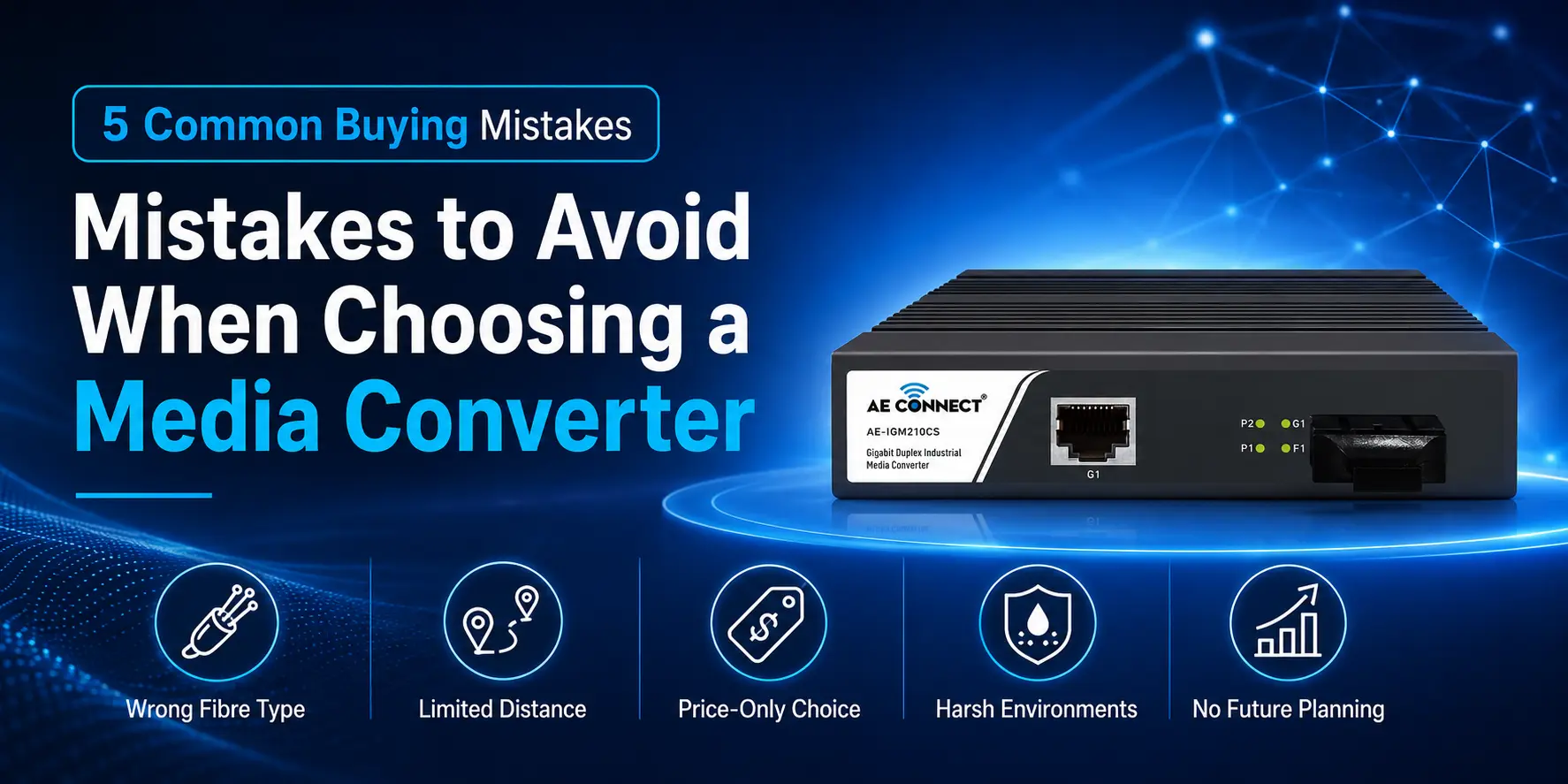
Businesses often make purchasing decisions based only on price. While cost is important, it should never be the only factor.
Avoid these common mistakes:
Choosing the Wrong Fibre Type
Using single-mode equipment with multimode fibre—or vice versa—can create compatibility problems.
Ignoring Distance Requirements
Selecting equipment that does not support the required transmission distance may reduce network reliability.
Purchasing Based Only on Cost
Lower-cost products may lack the performance or durability needed for long-term operation.
Overlooking Environmental Conditions
Commercial-grade equipment may not perform reliably in industrial or outdoor environments.
Ignoring Future Growth
Choosing equipment without considering future expansion often leads to unnecessary replacements.
How to Match a Media Converter to Your Business Application
Different industries have different networking requirements.
| Business Application | Recommended Solution |
| Office networks | Standard Gigabit networking solution |
| CCTV and surveillance | Fibre connectivity solution with Gigabit support |
| Educational campuses | Long-distance fibre networking solution |
| Manufacturing facilities | Industrial-grade networking device |
| Warehouses | Copper-to-fibre connectivity solution |
| Healthcare networks | High-reliability fibre networking equipment |
Matching the converter to the application helps improve performance while supporting long-term operational needs.
Why Choose AE Connect Media Converters?
Selecting the right networking partner is just as important as selecting the right equipment.
AE Connect’s fibre connectivity solutions are designed to help businesses build reliable, scalable, and high-performance networks.
Key advantages include:
- Reliable copper-to-fibre connectivity
- Stable high-speed data transmission
- Easy integration with existing infrastructure
- Solutions suitable for commercial and industrial environments
- Quality-focused design for dependable network performance
Whether you’re expanding an office network, deploying a surveillance system, or upgrading to fibre connectivity, AE Connect offers networking solutions that support long-term business growth.
Conclusion
Choosing the right Media Converter involves more than selecting a compatible device. Factors such as network distance, fibre type, transmission speed, installation environment, connector compatibility, and future scalability all play an important role in building a reliable and efficient network.
By evaluating these requirements before making a purchase, businesses can avoid compatibility issues, minimise future upgrade costs, and create a network infrastructure that supports long-term growth.
If you’re looking to better understand how these devices enhance modern networking, you can also read our blog, Media Converters: The Ultimate Network Expansion Tool, to learn more about their role in extending and optimising network connectivity.
Whether you’re upgrading an existing network or planning a new fibre deployment, AE Connect offers reliable networking solutions designed to meet the evolving needs of modern businesses. Contact our team today to find the right solution for your infrastructure requirements.
Frequently Asked Questions
What is a fibre media converter used for?
A fibre media converter connects different network media, such as copper Ethernet and fibre optic cables, allowing organisations to extend network distances without replacing their existing infrastructure.
How do I choose the right network media converter?
Consider your network distance, fibre type, required speed, connector compatibility, installation environment, and future expansion plans before investing in a network connectivity solution.
Can a fibre networking solution improve network performance?
Yes. It helps maintain reliable communication over longer distances and supports fibre connectivity. However, overall performance also depends on your network design, equipment, and bandwidth requirements.
What is the difference between single-mode and multimode fibre?
Single-mode fibre is suitable for long-distance communication, while multimode fibre is designed for shorter-distance applications within buildings, offices, and campuses.
Can fibre connectivity solutions be used for CCTV systems?
Yes. Fibre connectivity solutions, including Gigabit media converters, are widely used in IP surveillance systems to connect cameras across long distances while maintaining reliable network communication.
Are industrial networking devices necessary?
Industrial-grade networking devices are recommended for environments exposed to temperature changes, vibration, dust, humidity, or electromagnetic interference, where standard commercial equipment may not provide reliable performance.