
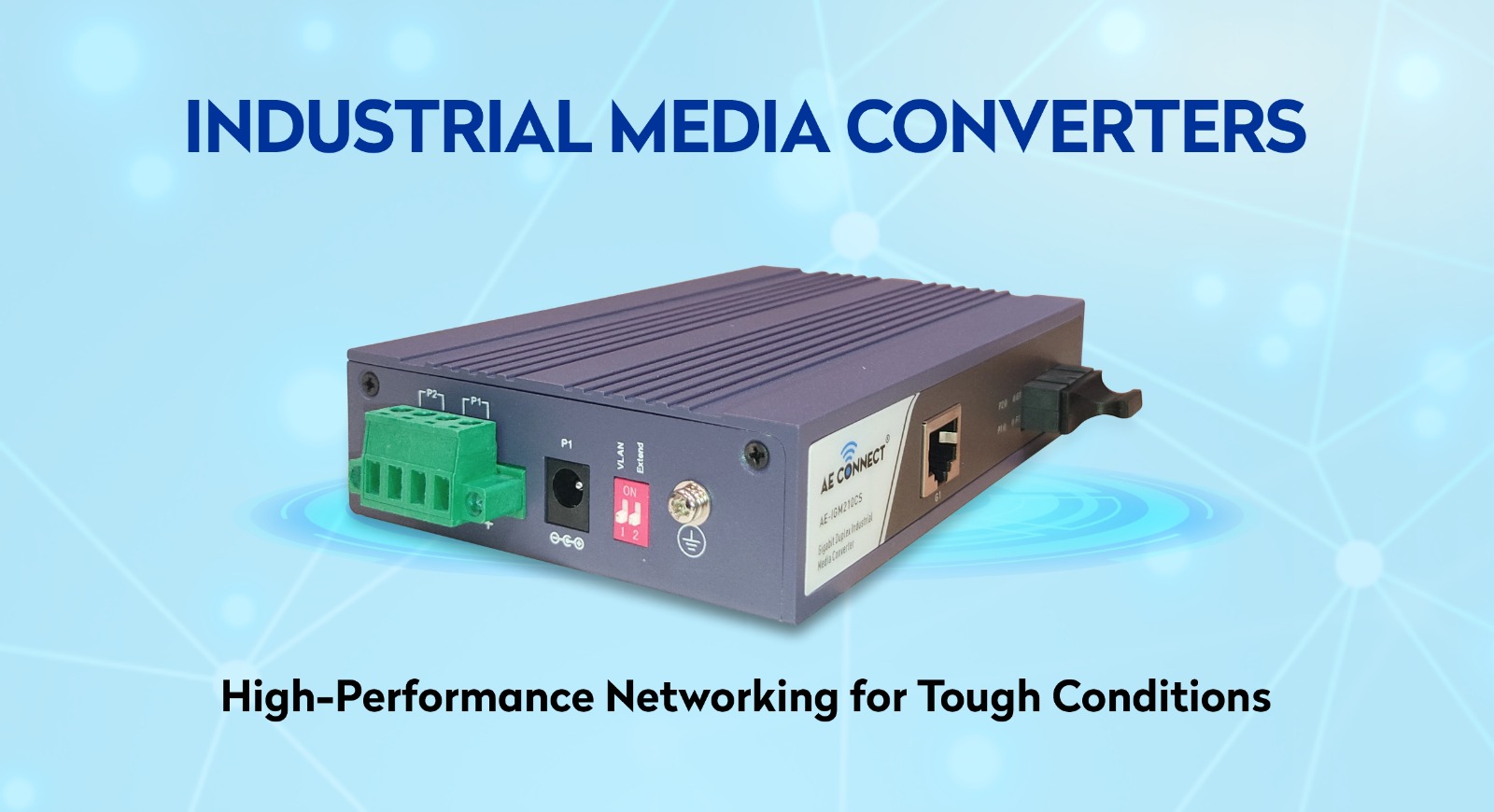
Media Converters are the frontline defense in industrial networking, providing the hardware resilience that standard gear simply cannot match. For factory floors and outdoor surveillance, environmental factors are constant threats. In these zones, Electromagnetic Interference (EMI) from heavy machinery and high-voltage cables is an invisible, persistent danger to network stability.
Industrial-grade Media Converters provide the necessary isolation and signal integrity to maintain uptime in high-EMI environments, acting as a robust bridge between copper and fiber infrastructures. This directly addresses the need for consistent performance in challenging conditions.
The Silent Killer of Productivity: Signal Interference
Signal interference causes more than just lag; it leads to data loss and total downtime. In industrial settings, copper cabling acts as an antenna, picking up electrical noise from motors and power lines.
Integrating Media Converters enables a seamless transition from EMI-prone copper to dielectric fiber optics. Fiber optic cables, being non-conductive, are inherently immune to electromagnetic induction and radio frequency interference (RFI), ensuring clean data transmission regardless of the electrical environment.
Why Industrial Media Converters are Different
Not all Media Converters are created equal. While commercial units suit climate-controlled offices, industrial models from AE Connect are built for harsh reality.
Key Features of Industrial Grade Hardware
| Feature | Commercial Converters | Industrial Media Converters |
| Operating Temp | 0°C to 50°C | -40°C to 75°C |
| Housing | Plastic or thin metal | IP40/IP67 Rated Aluminum |
| Mounting | Desktop | DIN-Rail or Wall Mount |
| Input Power | Single AC adapter | Redundant DC power inputs |
| EMI Shielding | Minimal | High-level ESD and Surge protection |
Strategic Benefits of Industrial Media Converters
- Unmatched Reach and Signal Integrity: Overcome the 100-meter limitation of copper Ethernet. Fiber-based Media Converters enable reliable data transmission over distances up to 80km, eliminating the need for costly repeaters and ensuring signal clarity over long-haul links.
- Protecting Legacy Investments: Avoid “rip and replace” cycles. Integrate fiber into existing copper infrastructures to modernize at a fraction of the cost.
- Enhanced Security: Fiber is significantly harder to tap than copper, adding physical data security.
- Reliability in Harsh Weather: Industrial Media Converters withstand humidity, dust, and vibration in outdoor or perimeter security setups.
Authentic Solutions from AE Connect
AE Connect provides a specialized range of media converters for high-performance B2B networking. Their catalog includes everything from plug-and-play unmanaged units to sophisticated managed switches with SFP slots.
The AE Connect Industrial Series is specifically engineered for resilience, featuring ruggedized aluminum housing and redundant DC power inputs. These features provide the necessary hardware redundancy and physical protection required for mission-critical industrial automation and high-availability networks.
Addressing the “Industrial Fiber Transition”
The long-distance fiber optic link created by these converters acts as a transparent bridge. You keep your current Ethernet switches and let the Media Converters manage the signal translation. This ensures a stable industrial network with zero disruption to your existing workflow.
Technical Specifications to Watch For
- Ethernet to Fiber Conversion: Look for auto-negotiation features for seamless setup.
- PoE Media Converters: Essential for powering IP cameras or VoIP phones via the data cable.
- SFP Port Versatility: Choosing Media Converters with SFP slots allows for easy transceiver swaps based on distance needs.
- Gigabit Data Rates: Ensure your hardware supports 10/100/1000Mbps to prevent bandwidth bottlenecks.
FAQs: Understanding Media Converters
Q1: Why should I avoid using standard office media converters in an industrial environment?
Commercial-grade units are not designed for the extreme temperatures, vibration, and electrical noise typical of factory floors. They often lack the robust housing, DIN-rail mounting options, and advanced EMI protection required for reliable operation in industrial cabinets, which can lead to frequent failures and network downtime.
Q2: Do media converters add latency?
Latency is negligible (microseconds). It has zero impact on almost all industrial applications.
Q3: Managed vs. Unmanaged?
Unmanaged is “plug and play.” Managed versions allow remote link monitoring, port configuration, and failure alerts.
Q4: How do I choose between Single-mode and Multi-mode?
This depends on distance. Multi-mode is generally used for shorter distances (up to 2km), while Single-mode is used for long-haul links (up to 100km). AE Connect provides Media Converters compatible with both.
Conclusion
Signal interference is not an unavoidable cost. Industrial Media Converters shield your data from environmental chaos. Explore the active fiber solutions atAE Connect to find the right fit for your infrastructure and ensure your business stays connected.