
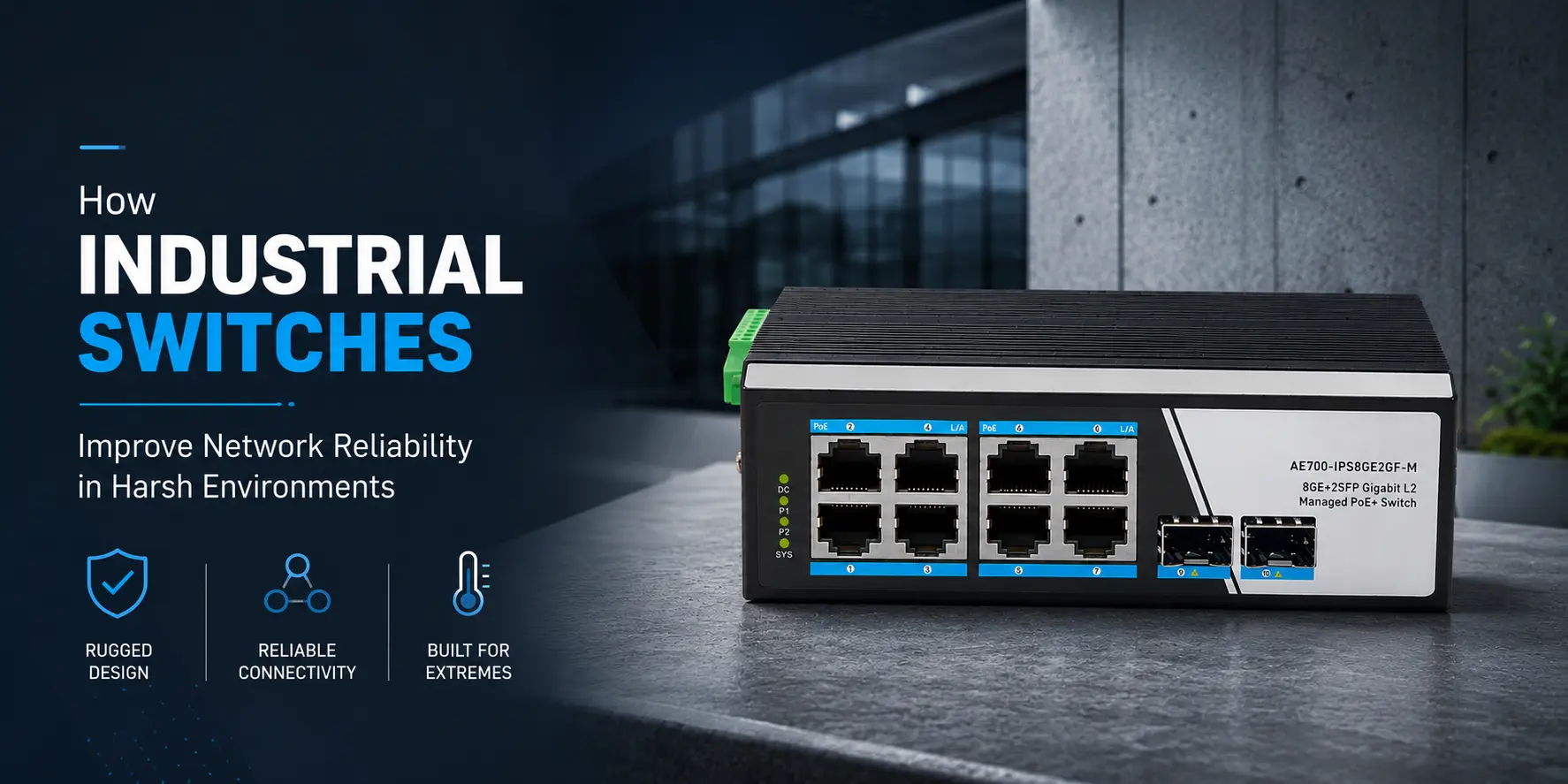
In industries where uninterrupted communication is essential, network reliability directly impacts productivity, safety, and operational efficiency. Manufacturing facilities, oil and gas plants, transportation systems, warehouses, mining sites, and outdoor surveillance networks all operate in environments where dust, vibration, moisture, extreme temperatures, and electrical interference are common. Standard networking equipment is often not designed to withstand these demanding conditions, leading to unexpected downtime and costly disruptions. This is where an Industrial Switch becomes a critical component of modern network infrastructure.
Unlike conventional switches, industrial-grade networking equipment is engineered to deliver stable, high-speed communication even in the harshest operating environments. From supporting automated production lines to ensuring continuous CCTV monitoring, industrial switches help organisations maintain reliable connectivity while reducing maintenance requirements. In this guide, we’ll explore why industrial switches are essential, the challenges they solve, and the key features that make them suitable for mission-critical applications.
Why Network Reliability Matters in Industrial Environments
Industrial networks are responsible for connecting machines, sensors, controllers, surveillance systems, and communication devices that keep daily operations running smoothly. Even a short network interruption can affect production schedules, delay critical processes, and increase operational costs.
Reliable network performance is particularly important because industrial environments often require:
- Continuous communication between connected devices
- Real-time monitoring of production processes
- Fast data transmission for automation systems
- Secure connectivity for surveillance and access control
- Consistent operation with minimal downtime
Unlike office networks, industrial environments rarely have the flexibility to tolerate communication failures. Every connected device plays a role in maintaining productivity and safety.
What Challenges Do Industrial Networks Face?
Before understanding how an industrial switch improves reliability, it’s important to recognise the conditions that place additional stress on networking equipment.
Extreme Temperature Variations
Industrial equipment is often installed in locations exposed to intense heat, freezing temperatures, or rapidly changing weather conditions. These environments can reduce the performance and lifespan of standard networking devices that are designed primarily for climate-controlled offices.
Industrial networking equipment is specifically engineered to operate across a much wider temperature range, allowing consistent performance regardless of environmental conditions.
Dust, Moisture and Humidity
Factories, warehouses, mining operations, and outdoor installations expose networking equipment to dust, water vapour, humidity, and airborne contaminants.
Over time, these environmental factors can affect internal components, increase maintenance requirements, and contribute to hardware failures.
Industrial Ethernet switches are built with durable construction that helps them perform reliably in these demanding environments.
Continuous Vibration and Mechanical Shock
Heavy machinery, conveyor systems, production equipment, and transportation infrastructure generate constant vibration that can loosen cable connections and damage conventional networking hardware.
Industrial network switches are designed to withstand vibration and mechanical stress, making them suitable for installations where equipment operates continuously.
Electromagnetic Interference (EMI)
Electrical motors, transformers, generators, and industrial machinery produce electromagnetic interference that can disrupt network communication.
High levels of electrical noise may result in unstable connections, communication errors, or packet loss if networking equipment is not designed for industrial applications.
Rugged networking solutions help minimise the effects of electromagnetic interference, ensuring more stable communication across industrial networks.
How Industrial Switches Improve Network Reliability
Industrial switches are designed with specialised features that enable reliable communication in environments where standard switches may struggle to perform. Their robust construction and advanced networking capabilities help organisations reduce downtime while maintaining efficient operations.
Built for Continuous Operation
Many industrial facilities operate around the clock, leaving little opportunity for network maintenance or unexpected outages.
Unlike commercial networking devices that are typically used during standard business hours, industrial switches are engineered for continuous operation. They are designed to deliver consistent performance throughout extended periods of use, making them ideal for production facilities, logistics centres, and critical infrastructure.
This reliability helps organisations minimise unexpected interruptions while supporting uninterrupted business operations.
Stable Performance in Demanding Conditions
Industrial environments constantly expose networking equipment to conditions that can affect communication quality. Temperature fluctuations, airborne particles, humidity, and vibration all place additional stress on network hardware.
Industrial-grade switches are manufactured using robust components that continue operating reliably despite these challenges. This consistent performance helps maintain communication between connected devices, reducing the risk of production delays caused by network instability.
Faster Recovery from Network Disruptions
Even well-designed industrial networks may occasionally experience hardware failures or communication interruptions.
Many managed industrial switches support network redundancy technologies that automatically establish alternative communication paths if a connection is lost. This allows the network to recover quickly, reducing downtime and ensuring that critical systems remain operational.
For organisations where every minute of downtime affects productivity, rapid network recovery provides significant operational benefits.
Improved Network Traffic Management
Industrial environments often support multiple systems simultaneously, including automation equipment, IP surveillance, voice communication, wireless access points, and monitoring devices.
Managed industrial switches help prioritise important network traffic, ensuring that business-critical applications receive the bandwidth they require without being affected by less important data transmissions.
This intelligent traffic management contributes to more stable network performance while improving the efficiency of connected industrial systems.
Reliable Power for Connected Devices
Many industrial installations rely on Power over Ethernet (PoE) to supply both data and electrical power through a single Ethernet cable.
Industrial PoE switches simplify network deployment by reducing cabling requirements while providing reliable power to connected devices such as IP cameras, wireless access points, industrial sensors, and access control systems.
This approach improves installation efficiency while supporting dependable network communication across industrial environments.
Where Are Industrial Switches Commonly Used?
An Industrial Switch is designed for environments where dependable communication is essential for safety, productivity, and operational continuity. Its rugged design and reliable performance make it suitable for a wide variety of industries.
Manufacturing Plants
Modern manufacturing relies heavily on automation systems, programmable logic controllers (PLCs), robotic equipment, and industrial sensors. A stable network ensures these devices communicate without delays, helping maintain production efficiency and minimise costly downtime.
Warehousing and Logistics
Warehouses use automated storage systems, barcode scanners, wireless access points, CCTV cameras, and inventory management software. Industrial networking equipment supports continuous communication between these systems, improving operational accuracy and workflow.
Oil and Gas Facilities
Refineries, offshore platforms, and processing plants operate in demanding environments exposed to heat, vibration, moisture, and electrical interference. Industrial Ethernet switches provide reliable connectivity for monitoring systems, process automation, and safety equipment.
Transportation Infrastructure
Railway stations, airports, ports, and traffic management systems require uninterrupted communication for signalling, surveillance, and operational control. Rugged network switches help maintain stable communication even in outdoor and high-vibration environments.
Renewable Energy and Utilities
Power plants, solar farms, wind energy installations, and water treatment facilities depend on continuous monitoring and control. Industrial-grade networking solutions help ensure critical infrastructure remains connected and operational around the clock.
Outdoor Surveillance Systems
Industrial switches are widely used to support IP cameras installed in campuses, factories, public spaces, and perimeter security systems. Their ability to operate reliably in outdoor environments makes them ideal for surveillance applications.
Key Features to Consider Before Buying an Industrial Switch
Selecting the right industrial networking equipment requires careful evaluation of both your current operational needs and future expansion plans.
Wide Operating Temperature Range
Choose equipment that can operate reliably within the environmental conditions of your installation. Industrial devices are specifically designed to withstand much wider temperature ranges than standard commercial switches.
Redundant Power Inputs
Redundant power supplies improve network availability by allowing equipment to continue operating if one power source becomes unavailable. This feature is especially valuable for mission-critical applications.
Managed or Unmanaged Configuration
The right option depends on the complexity of your network.
| Managed Industrial Switch | Unmanaged Industrial Switch |
| Remote monitoring and configuration | Plug-and-play operation |
| VLAN and Quality of Service (QoS) support | Simple installation |
| Network traffic management | Suitable for basic applications |
| Better scalability for growing networks | Lower configuration requirements |
Managed industrial switches are generally recommended for larger industrial networks where performance monitoring and traffic control are important.
Gigabit Connectivity
As industrial automation continues to evolve, networks are required to handle increasing volumes of data. Gigabit connectivity helps maintain fast and reliable communication between connected devices.
Fibre Uplink Support
Industrial environments often require communication between buildings or across large production facilities. Fibre connectivity enables long-distance, high-speed communication while reducing susceptibility to electromagnetic interference.
DIN-Rail Mounting
DIN-rail mounting simplifies installation within industrial control panels and equipment cabinets while helping maintain organised layouts.
Common Mistakes to Avoid
Choosing industrial networking equipment without proper planning can affect long-term performance and increase operational costs.
Some common mistakes include:
- Selecting commercial switches for industrial environments
- Ignoring environmental conditions before installation
- Choosing equipment with insufficient port capacity
- Overlooking future network expansion
- Not considering redundant power requirements
- Focusing only on purchase price rather than long-term reliability
Evaluating these factors before purchasing helps ensure your network remains dependable as operational requirements continue to grow.
Why Choose AE Connect Industrial Switches?
Reliable industrial networking starts with dependable equipment. AE Connect offers industrial networking solutions designed to deliver stable communication across challenging operating environments while supporting long-term business growth.
Our industrial switches are developed to help organisations build resilient network infrastructures that support automation, surveillance, industrial communication, and critical operational systems.
Key benefits include:
- Rugged industrial-grade construction
- Reliable performance in demanding environments
- Stable high-speed network connectivity
- Support for industrial automation and surveillance
- Fibre connectivity options for extended communication
- Managed and unmanaged solutions for different applications
- Scalable designs that support future expansion
Whether you’re upgrading an existing industrial network or planning a new installation, AE Connect provides networking solutions that help improve reliability while reducing maintenance requirements.
Conclusion
Industrial environments demand networking equipment capable of operating reliably under conditions that challenge conventional commercial devices. An Industrial Switch provides the durability, stability, and advanced networking capabilities needed to support continuous communication across manufacturing facilities, warehouses, transportation systems, utility networks, and outdoor installations.
By choosing industrial-grade networking equipment with features such as Gigabit connectivity, redundant power inputs, fibre uplinks, and advanced management capabilities, organisations can reduce downtime, improve operational efficiency, and build a more resilient network infrastructure.
If you’re looking to strengthen your understanding of industrial networking, you can also explore our blog, Industrial Switch: The Only Beginner’s Guide You Need, which explains the fundamentals of industrial switching technology and how it supports modern industrial communication.
AE Connect offers reliable industrial networking solutions designed to meet the evolving needs of businesses operating in demanding environments. Contact our team today to find the right industrial networking solution for your application.
Frequently Asked Questions
What is an Industrial Switch used for?
An Industrial Switch connects networking devices in demanding environments such as factories, warehouses, transportation systems, and utility facilities while maintaining reliable communication under challenging operating conditions.
How is an Industrial Switch different from a commercial switch?
Industrial switches are designed to withstand extreme temperatures, vibration, moisture, dust, and electromagnetic interference, whereas commercial switches are intended for controlled indoor environments.
Can Industrial Switches support Power over Ethernet (PoE)?
Yes. Many industrial PoE switches provide both power and data over a single Ethernet cable, making them suitable for IP cameras, wireless access points, sensors, and access control systems.
Are managed industrial switches better than unmanaged models?
Managed industrial switches provide advanced features such as remote monitoring, VLAN support, Quality of Service (QoS), and network traffic management. Unmanaged models are suitable for straightforward plug-and-play installations.
Which industries commonly use Industrial Switches?
Industrial switches are widely used in manufacturing, logistics, transportation, utilities, renewable energy, oil and gas, mining, and industrial surveillance applications.
What should I consider before purchasing an Industrial Switch?
Consider the operating environment, temperature range, number of ports, network management requirements, power redundancy, fibre connectivity, scalability, and long-term reliability before making your selection.