
Introduction
In our hyper-connected digital world, we often focus on the powerful devices and the cloud. However, the physical links that tie everything together are just as critical. High-quality patch cords are the unsung heroes of network performance, acting as the vital arteries that ensure fast, reliable data flow.
What Are Patch Cords?
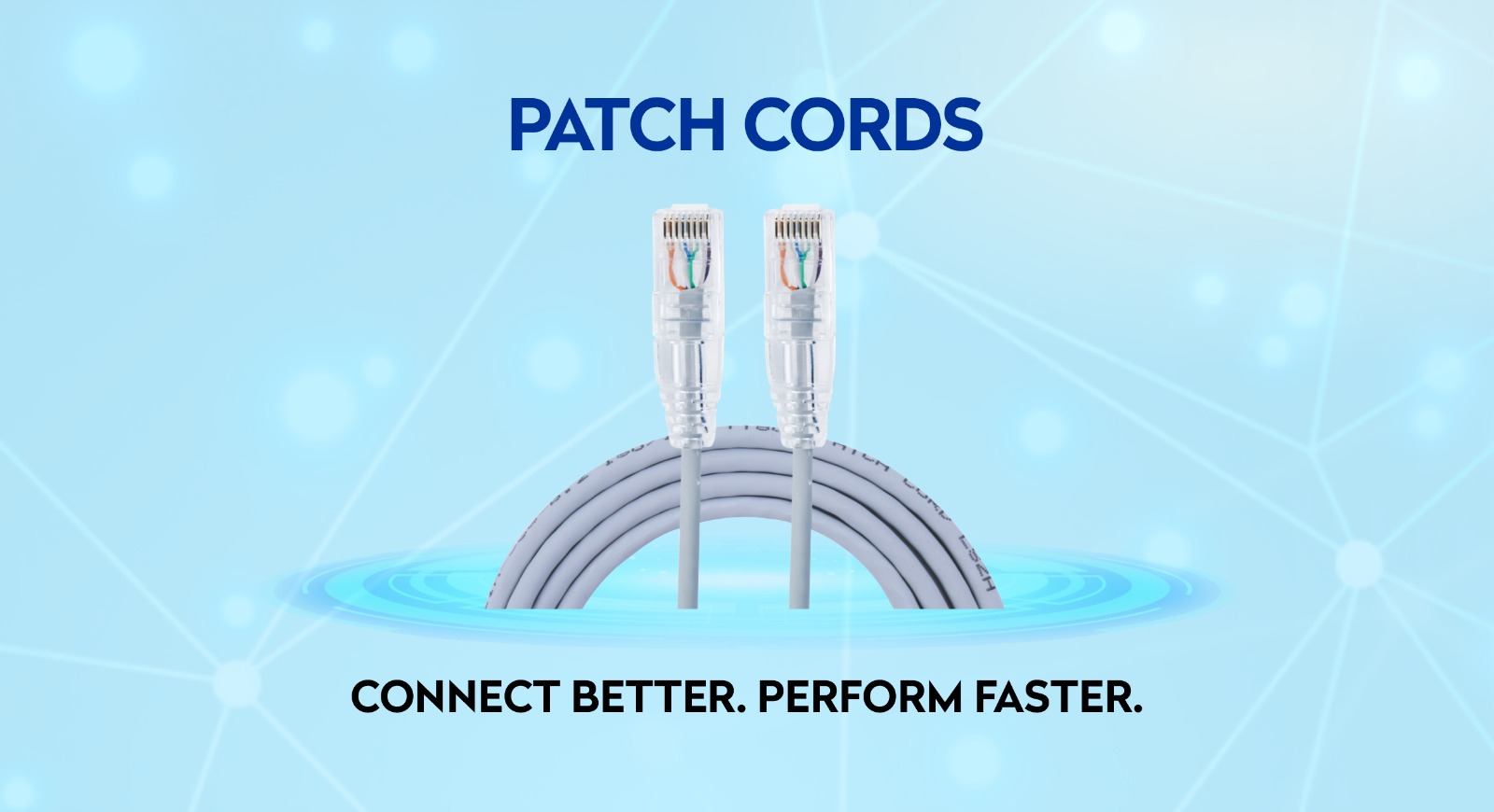
A patch cord, or patch cable, is a short-length cable used to connect one electronic device to another, most commonly within a local area network (LAN). They are the flexible, final links that connect your computer to a wall outlet or patch panel, and connect network switches to routers or servers.
There are two primary categories:
- Copper Patch Cords: These are the most common type, used for Ethernet connections. They consist of twisted pairs of copper wire. You’ll see them specified by category, such as Cat6, and Cat6a, each offering different levels of performance, speed, and protection against interference.
- Fiber Patch Cords: These cables use optical fibers to transmit data as light signals. They are the standard for high-speed, high-bandwidth, and long-distance connections, such as in data centers or connecting buildings. They come in single-mode (for extreme distances) and multimode (for shorter, high-bandwidth links) variants.
The Critical Role of Patch Cords in Your Network
Choosing a high-quality patch cord is not just about connecting two ports; it’s about protecting the integrity of your entire network.
- Ensuring Seamless Connectivity: Patch cords are the final bridge between your devices and the larger network. Their connectors (like RJ45 for copper or LC/SC for fiber) must be precisely manufactured to ensure a solid, stable link.
- Delivering High-Speed Performance: Your network is only as fast as its weakest link. A low-quality patch cord can bottleneck a 10-Gigabit network, reducing it to a fraction of its potential speed. Certified Cat6a or fiber patch cords are essential for handling demanding applications like 4K video streaming, cloud computing, and large file transfers.
- Maintaining Signal Integrity: Patch cords are designed to protect data from interference. Copper cables use twisted pairs to reduce crosstalk (signal bleed between wires), while fiber optics are completely immune to electromagnetic interference (EMI). This ensures your data arrives intact, preventing errors, packet loss, and slow speeds.
- Providing Scalability & Flexibility: As your network grows, you’ll need to add or move devices. Patch cords provide this flexibility. Using color-coded cables and various lengths allows for an organized, scalable, and easy-to-manage network infrastructure.
How to Choose the Right Patch Cord
Selecting the correct cable is simple when you know what to look for.
- Application & Speed: For a standard home or small office network, Cat6 is an excellent choice, supporting speeds up to 10 Gbps over shorter distances. For data centers or future-proofing a high-performance business network, Cat6a or fiber optics are the better investment.
- Connector Type: Check your devices. Most Ethernet connections use RJ45 connectors. Fiber has various types, with LC and SC being the most common.
- Cable Length: Choose a length that is just long enough to connect your devices without excessive slack, which can cause clutter and airflow issues. Avoid stretching a cable that is too short, as this can damage the connector or port.
- Quality & Certification: Always opt for patch cords that meet industry standards, such as TIA/EIA for copper. This certification ensures the cable has been tested and meets specific performance benchmarks.
Best Practices for Cable Maintenance
To maximize the life and performance of your patch cords, follow these simple tips:
- Proper Cable Management: Use cable ties, hooks, or management arms to route cables neatly. This prevents tangles, kinks, and accidental damage from physical stress.
- Regular Inspection: Periodically check for visible damage, such as frayed jackets, bent pins, or loose connectors.
- Keep Connectors Clean: Dust and dirt can obstruct a connection, especially with sensitive fiber optics. Keep connectors capped when not in use and clean them with approved tools if performance issues arise.
Frequently Asked Questions (FAQ)
Q1: What is the main difference between Cat5e and Cat6 patch cords?
A1: Cat6 supports higher bandwidth (up to 250 MHz) and can handle speeds up to 10 Gbps at shorter distances (under 55 meters). Cat5e is limited to 100 MHz and 1 Gbps. Cat6 also has stricter specifications for reducing crosstalk and system noise.
Q2: When should I use a fiber patch cord instead of a copper one?
A2: Use fiber for connections over 100 meters (328 feet), for extremely high-bandwidth needs (like in a data center), or in environments with high electromagnetic interference (EMI), such as industrial settings.
Q3: Can I use a patch cord for a long-distance run inside a wall?
A3: It is strongly discouraged. Patch cords use stranded wire for flexibility, which is not ideal for long, permanent runs. You should use solid-core “bulk” or “structural” cabling for permanent installations inside walls, which is then terminated at a wall plate or patch panel.
Conclusion
Ready to transform your network’s reliability? Contact AE Connect today and start your journey to seamless connectivity.